When people think about organ donation, they often imagine one situation: a person is declared brain dead, while their heart is still beating with the help of a ventilator, and their organs are donated for transplantation.
But organ donation can happen through two main pathways:
Donation After Brain Death (DBD)
Donation After Circulatory Death (DCD)
Both can save lives. The main difference is how death is determined and when the organs are recovered.
Donation After Brain Death (DBD):
Brain death means there is a complete and irreversible loss of all brain function, including the brainstem.
The person is legally and medically dead, even though a ventilator can keep the heart beating and the organs supplied with oxygen for a period of time.
This allows doctors to maintain the organs until they can be carefully recovered for transplantation.
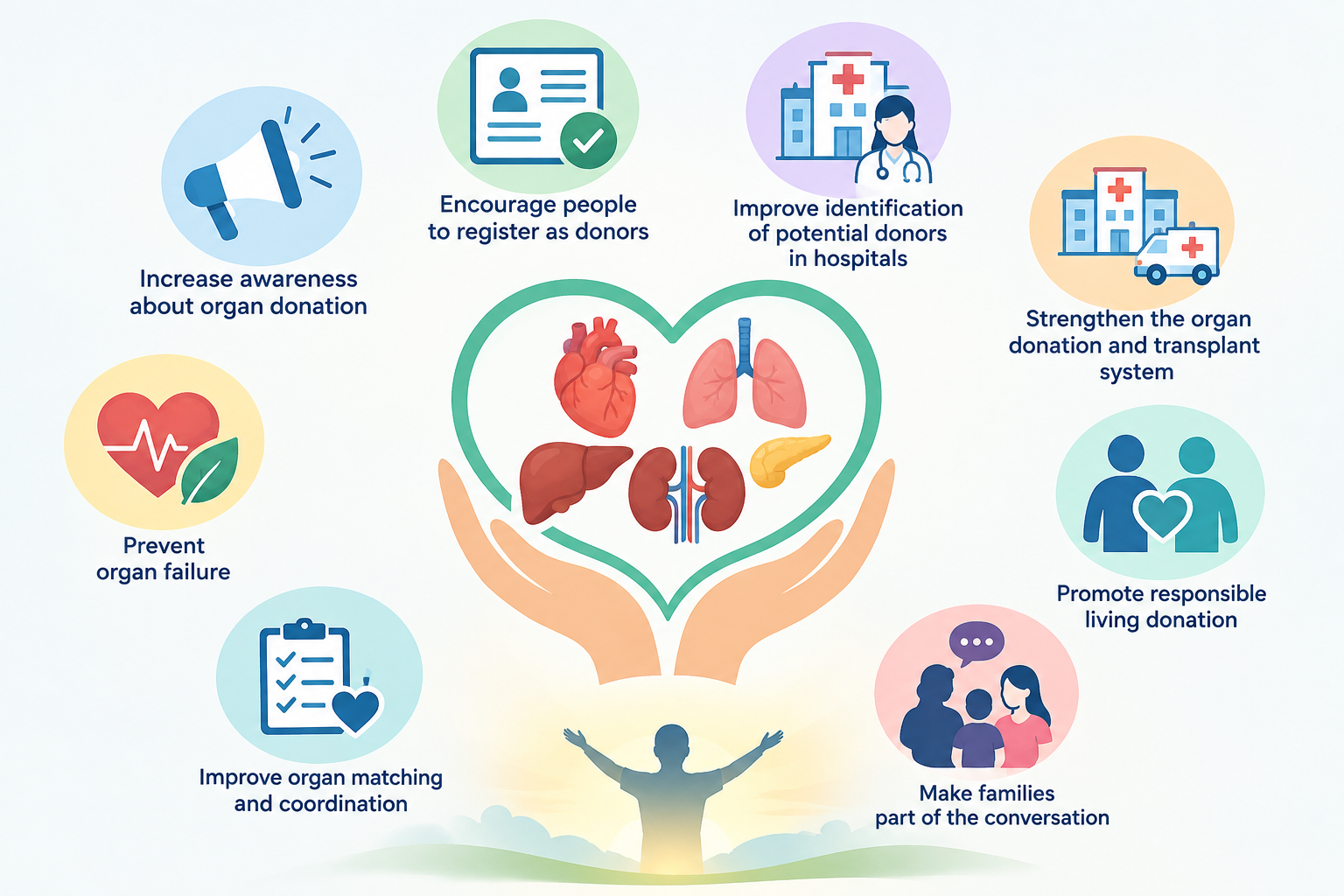
Organs commonly donated after brain death include: Heart, Lungs, Liver, Kidneys, Pancreas, Small intestine
Because blood continues to circulate until organ recovery, DBD generally provides a more controlled process for organ preservation and transplantation.
Donation After Circulatory Death (DCD):
Donation After Circulatory Death, also called Cardiac Death, is different.
Here, the person does not meet the medical criteria for brain death. Instead, death is declared after the irreversible stopping of circulation and breathing, according to established medical and legal protocols.
DCD may occur when life-sustaining treatment is withdrawn because the treatment can no longer help the patient and death is expected to follow.
Once death is declared, organ recovery begins as quickly as possible to reduce the time the organs are without blood and oxygen.
Organs that may be donated after DCD include: skin, heart valve, bones, corneas
The two pathways also differ in timing. DBD usually allows more time to prepare and recover organs, while DCD requires very careful coordination because organs can be affected by the period without blood flow.
Both pathways can give the gift of life.
DBD and DCD are established pathways of deceased organ donation. What matters is that death is determined according to accepted medical and legal standards, and that the donation process respects the donor, the family and the patients waiting for a transplant.