
Brain stem death is a condition in which the brain has permanently and completely stopped working.
Although machines such as a ventilator may keep the heart beating and the lungs working for a short time, the person has died. The brain can no longer control breathing, thinking, movement, or any other body function, and there is no possibility of recovery.
Many people confuse brain death with a coma, but they are not the same.
- A person in a coma is alive. Their brain is still functioning to some extent and there is a possibility—however small—of recovery.
- A person who is brain dead has permanently lost all brain function. Brain death is irreversible and is legally and medically recognized as death.
Before brain stem death is declared, doctors carry out a series of strict medical tests. In India, brain death is certified only after following the legal procedures laid down under the law and by qualified medical experts.
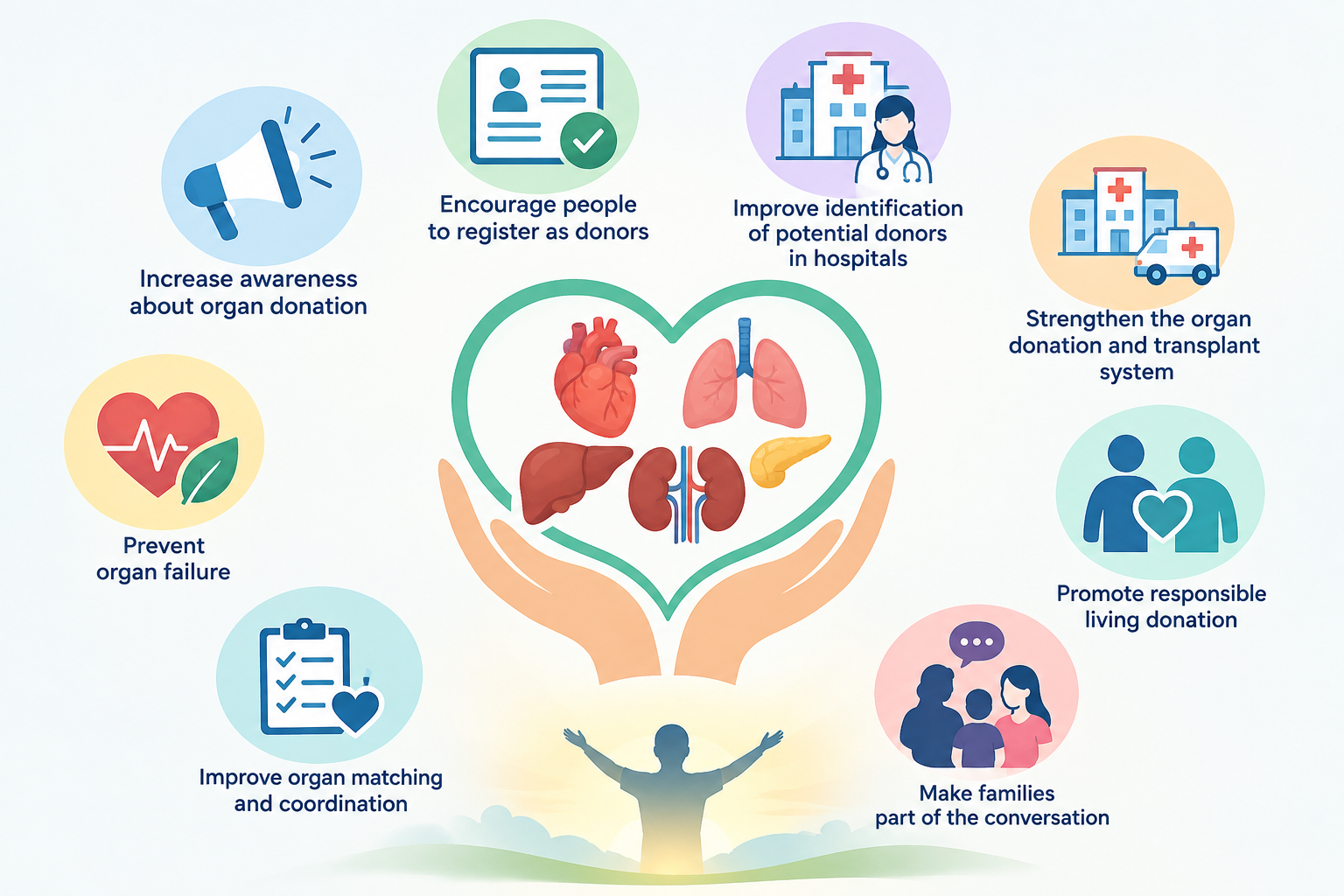
Brain stem death makes deceased organ donation possible. If the person had wished to donate their organs and the family gives consent as required, healthy organs can be donated to save the lives of people waiting for a transplant.
Understanding brain stem death helps families make informed decisions during difficult times.