
“Am I too old?”
“I’m not in perfect health.”
“Can someone like me really make a difference?”
These are some of the most common questions people ask when they think about organ donation. The truth is, many people rule themselves out long before a medical expert ever would.
The simple answer is this:
Almost anyone can become an organ donor.
Age Is Not the Deciding Factor
One of the biggest misconceptions is that only young people can donate organs.
In reality, there is no fixed age limit for organ donation. What matters is the condition of the organs at the time they are needed—not the number of birthdays someone has celebrated.
People in their 60s, 70s, and even beyond have successfully donated organs and tissues that have transformed lives.
Don’t decide for yourself that you’re “too old.” Let medical professionals make that decision if the opportunity ever arises.
You Don’t Have to Be Perfectly Healthy
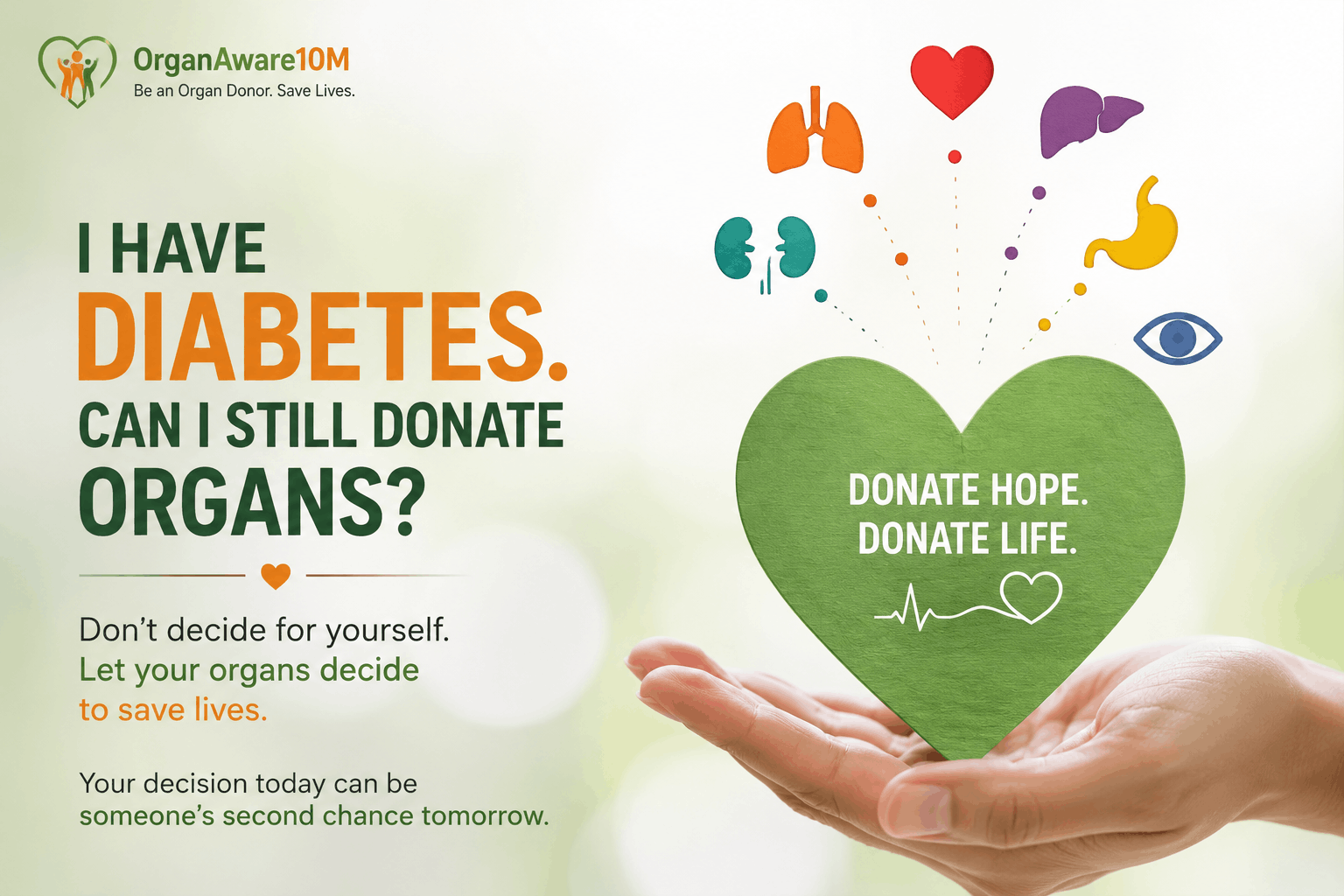
Many people believe that if they have diabetes, high blood pressure, or another medical condition, they cannot donate.
That isn’t always true.
Every potential donor is assessed individually. While some medical conditions may prevent certain organs from being donated, other organs or tissues may still be suitable to help someone else.
In many cases, even when one organ cannot be used, others can.
One Decision Can Help Many People
Organ donation is not just about saving one life.
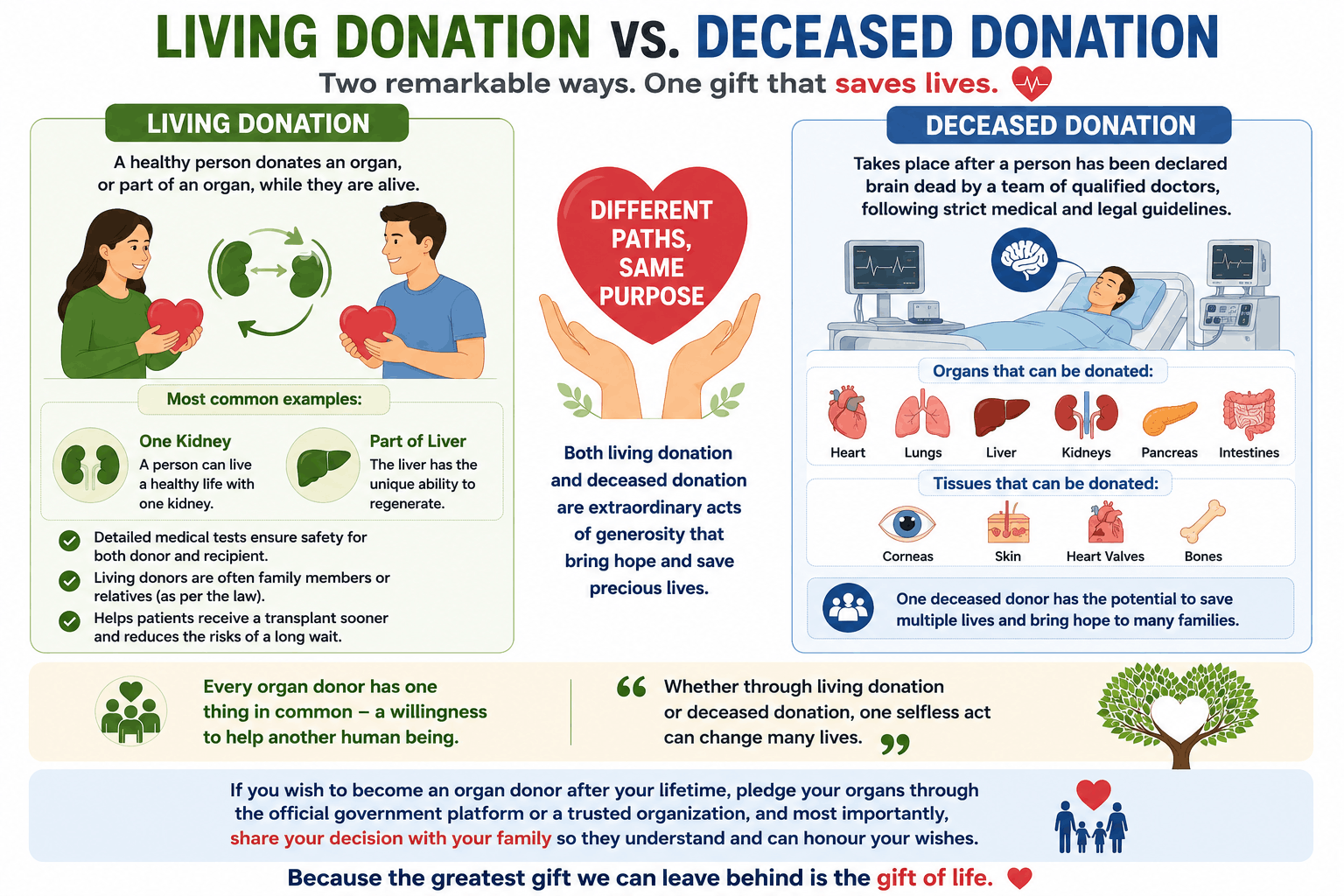
A single donor may help several people through organ donation and many more through tissue donation.
Imagine the impact:
- A child receives a healthy heart.
- A father receives a kidney and returns to his family.
- Someone regains their eyesight through a cornea transplant.
- A burn survivor benefits from donated skin.
- Another patient receives a second chance through a liver transplant.
One person’s generosity can create hope for multiple families.
Your Family Matters Too
Choosing to become an organ donor is an important step, but sharing your decision with your family is just as important.
In moments of grief, families often have to make difficult decisions. When they already know your wishes, it becomes easier for them to honour your choice.
A simple conversation today can remove uncertainty tomorrow.
Don’t Rule Yourself Out
The most common reason people never become organ donors is not because they are ineligible.
It is because they assume they are.
Instead of asking, “Can I donate?”
Ask yourself, “What if I can?”
That one question could change someone else’s future.
A Gift Beyond a Lifetime
Most of us hope to leave behind something meaningful—a legacy of kindness, love, and compassion.
Organ donation is one of the few gifts that continues long after we are gone. It allows a part of us to live on by giving someone else the chance to celebrate another birthday, watch their children grow, or simply wake up to another sunrise.
Not everyone will have the opportunity to become an organ donor.
But everyone has the opportunity to make an informed choice.
Perhaps the most important question isn’t “Who can become an organ donor?”
It’s “Could my decision one day become someone else’s second chance?”